

Make an equipment inventory
List each item, quantity, dimensions and weight from a reliable product specification where available. Keep a note of any storage, assembly or installation instructions. Group small accessories by use, but record substantial equipment separately so its requirements remain visible.
Identify the space that is genuinely available after preserving access to doors, cupboards and ordinary household activities. A room’s total floor area is not the same as the footprint available for storage.
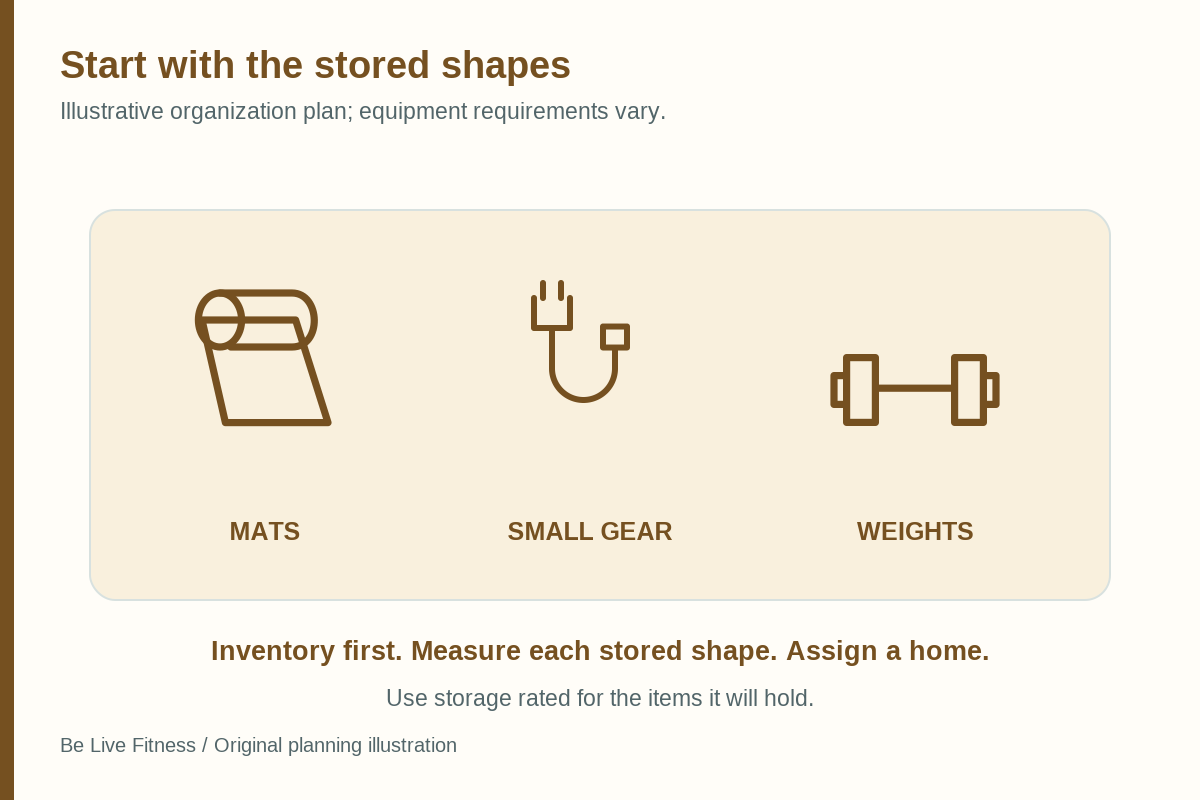
Match the support to the equipment
Separate geometry from capacity. A shelf may be wide enough without being rated for the intended load, and a rack’s published total limit may have different limits for individual positions. Decathlon’s DOMYOS storage-rack listing, for example, specifies different storage positions rather than treating its headline capacity as permission to place every item anywhere.
Read the exact system’s assembly, installation and use instructions. Eleiko’s cited storage-rack manual calls for a stable, level base and recommends securing the covered systems to the floor with installation by an appropriate professional. Those conditions apply to the systems in that manual; do not transfer a different rack’s instructions to your own.
Plan an arrival and return path
Mark where each item starts, where it is used and where it returns. Test the arrangement with empty space or paper footprints before moving heavy equipment. Keep frequently used accessories accessible without requiring you to rearrange several other objects.
Do not calculate a floor’s structural capacity from a product rack rating. If installation, floor suitability or handling is uncertain, resolve that with the relevant manufacturer or qualified professional before relying on the layout. This page is an organization worksheet, not a structural or exercise assessment.
Keep the storage map current
Give each item a defined position and keep the relevant instructions with the inventory. When equipment changes, recheck both fit and product requirements instead of placing a new item wherever a gap appears.
Use a short exception list for items awaiting repair, missing components or unresolved storage questions. Keeping the issue visible is more useful than making the room look finished while the storage arrangement remains unverified.
Home-equipment storage map
| Item / quantity | Size and weight source | Assigned position | Requirements to confirm |
|---|---|---|---|
| Mat / light accessory | Exact product information | Choose a usable place | Care and storage instructions |
| Weights / substantial item | Exact product information | Compatible support | Position-specific rating |
| Rack or storage unit | Exact model instructions | Measured footprint | Assembly, installation and floor suitability |
Put the plan to work
Use your own information to make a practical next step.
Open the planning worksheetSources and review
These sources support the factual details in this guide. Policies, prices and services can change; check the official source before acting.
- Decathlon UK: DOMYOS storage rack specificationsChecked November 24, 2026
- Eleiko: storage-rack installation and use manualChecked November 24, 2026
An original planning resource. Sources identify the factual references used; examples and worksheets are our own.
How these guides are prepared